onNAV Storm
Storm warnings for the places you care about, drawn where the National Weather Service drew them. A new onNAV app for the US.
Right now NWS has 0 alerts in effect across 0 states and waters.
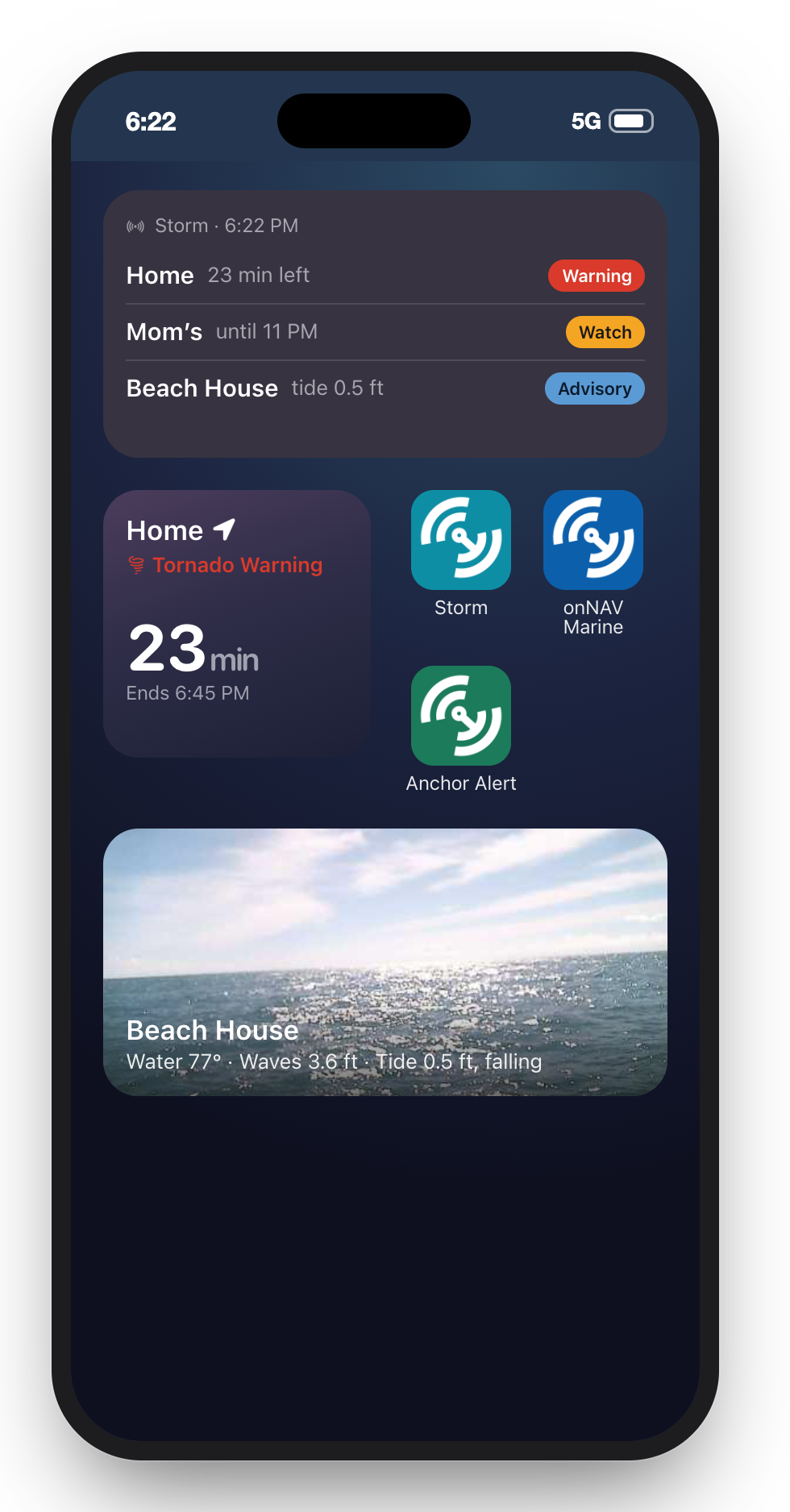
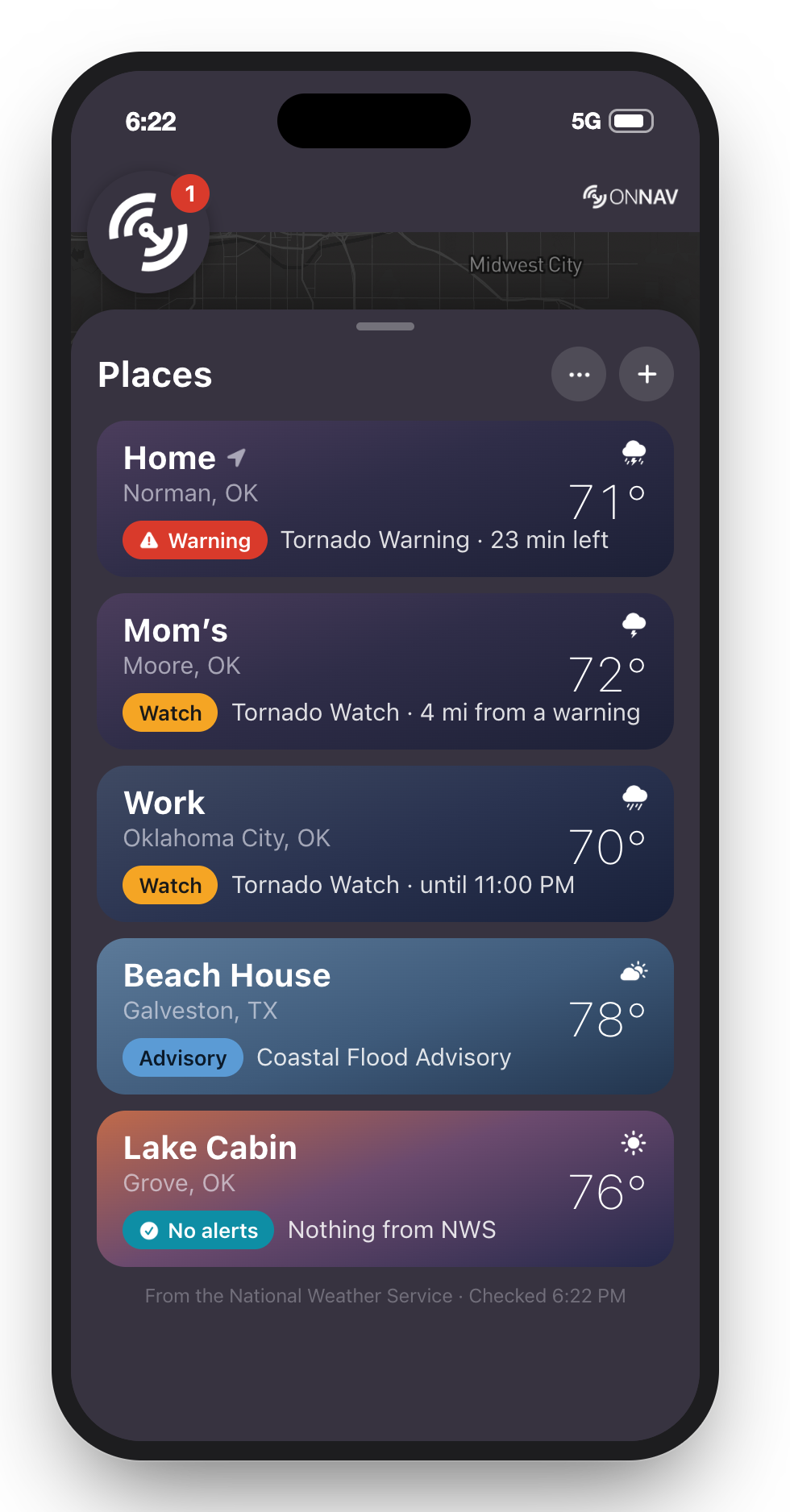
What it does
- Rings when a warning covers where you are, even on silent. Only then, so it’s believed when it does.
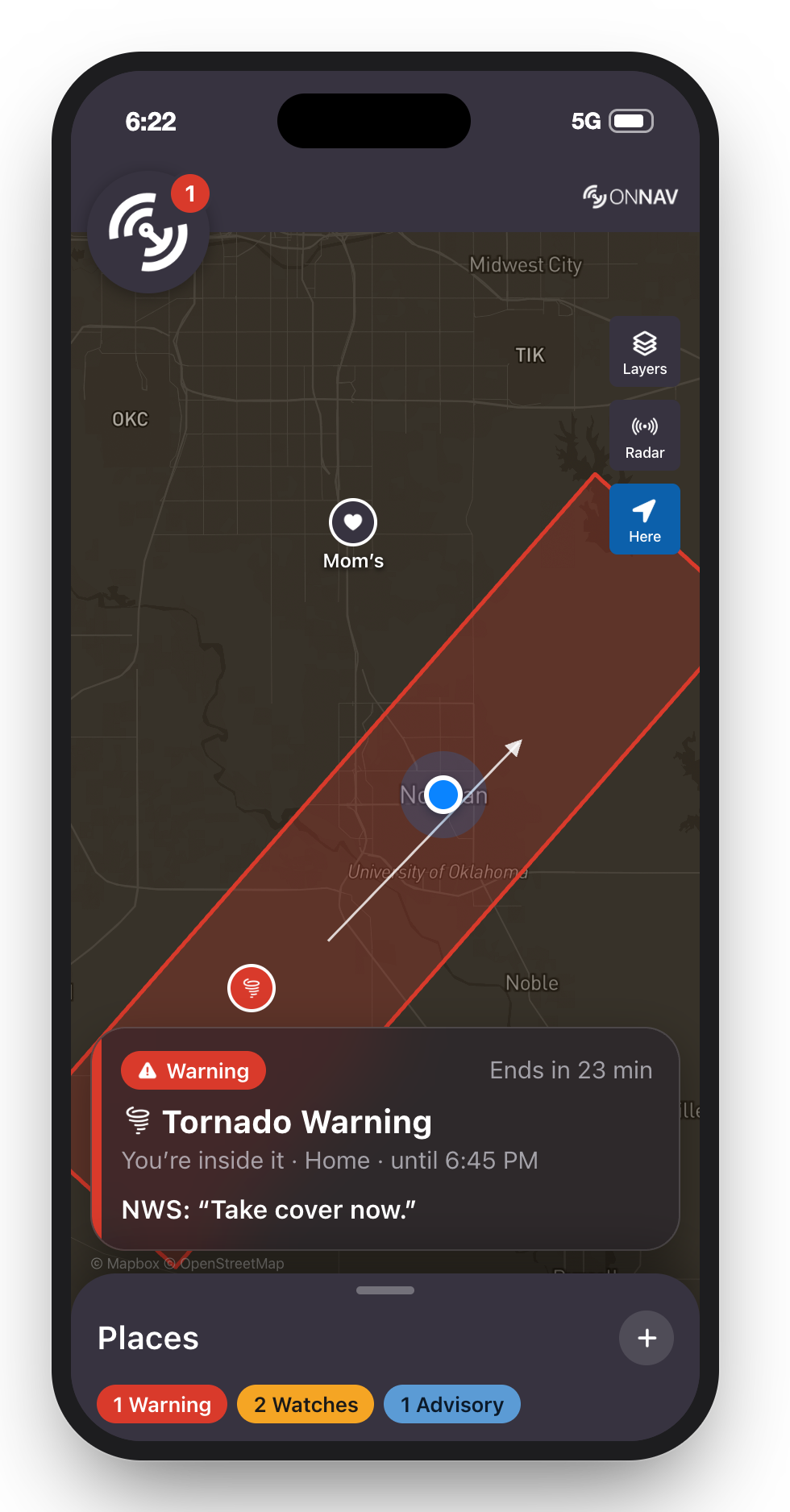
- Watches your places. Home, a parent’s house, the beach house. The government’s Wireless Emergency Alerts only reach the phone where it is.
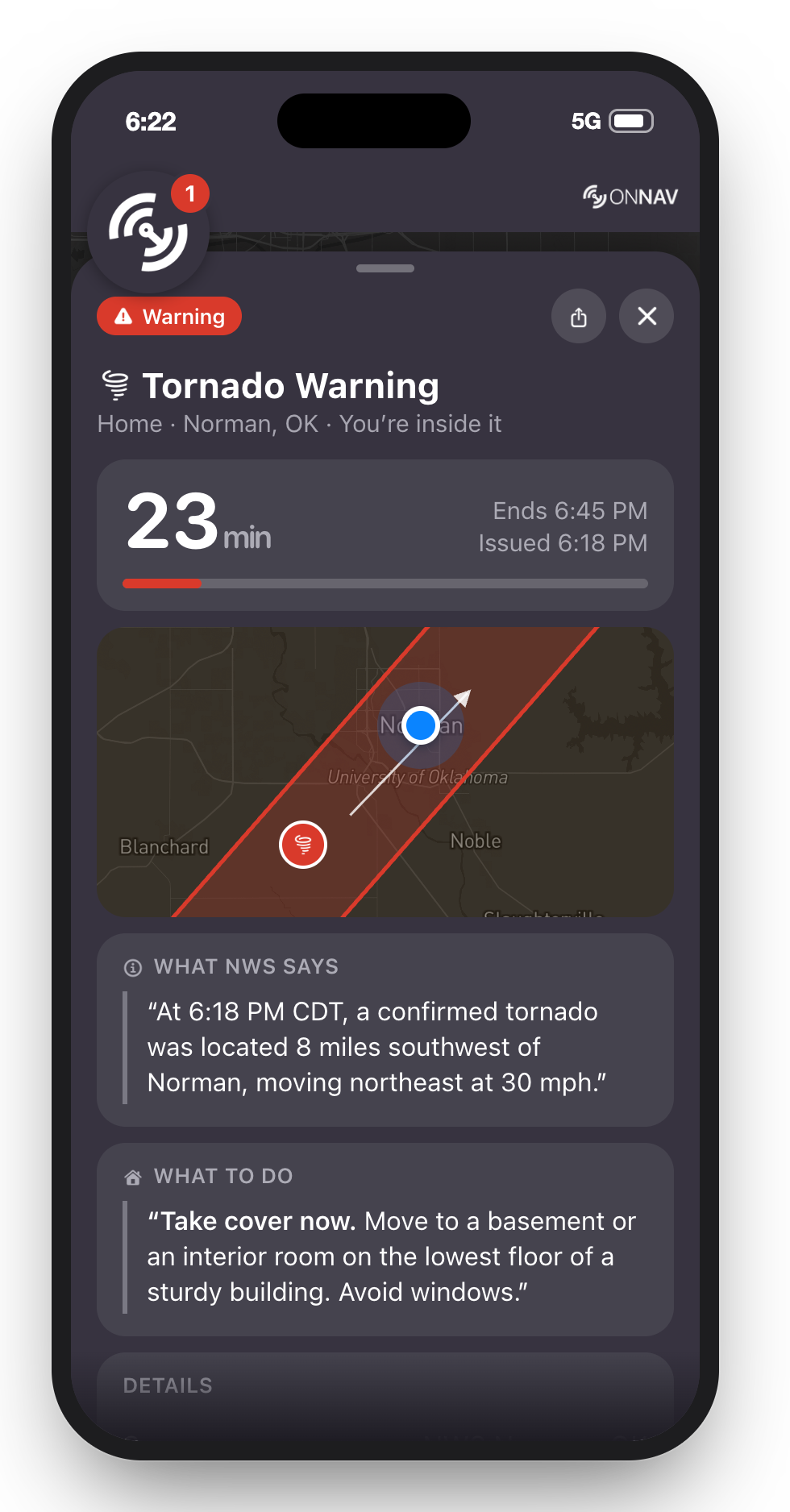
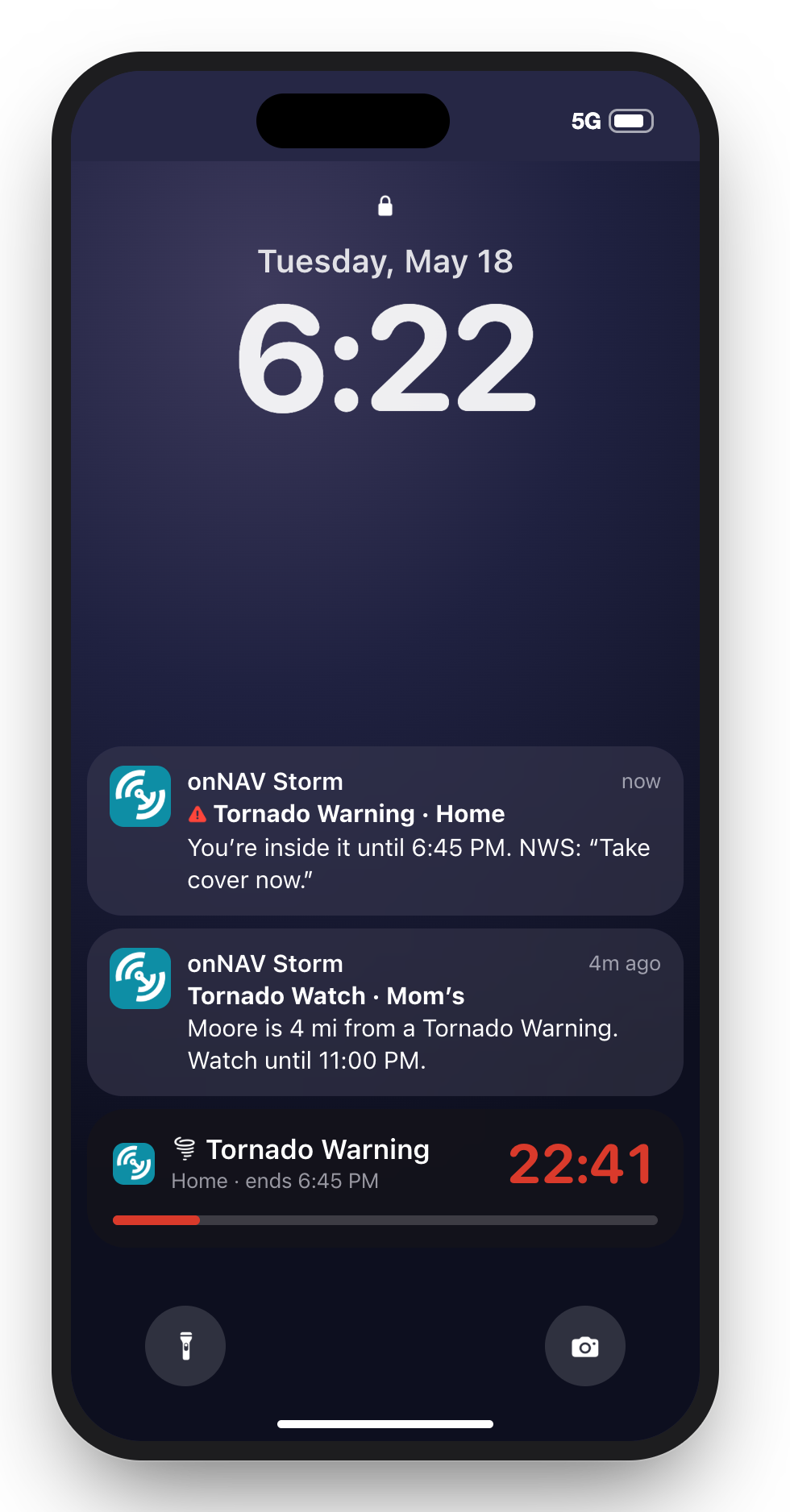
- Draws the warning as NWS drew it. A shape, not the county around it. Mom’s in Moore hears “4 mi from a warning”, not a siren. Try it.
- Counts down. The minutes left, on the warning, the Lock Screen and a widget.
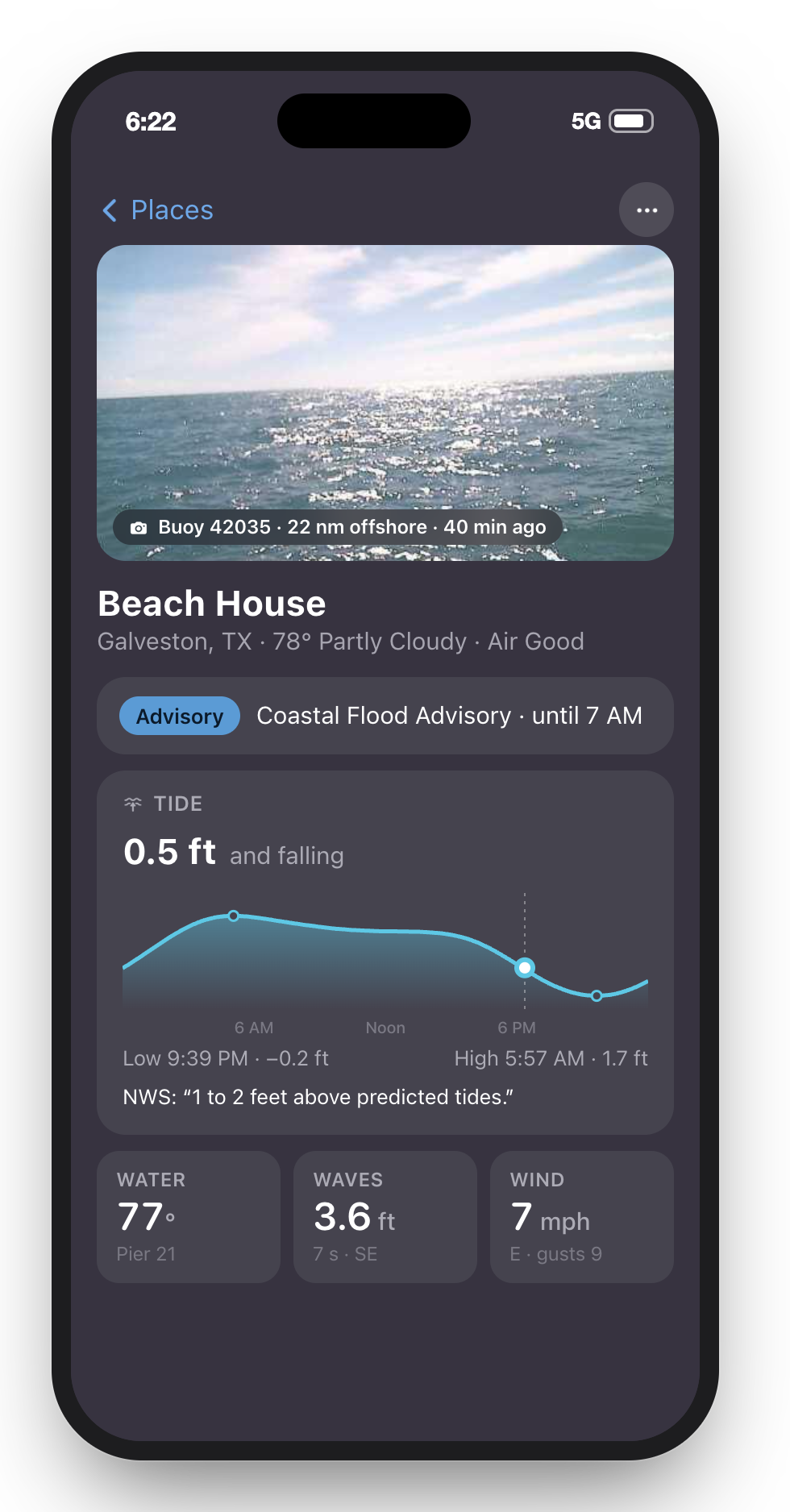
- Shows the coast. For a place by the sea: the nearest buoy’s camera, the day’s tide, the water, waves and wind. A Coastal Flood Advisory means more with the tide beside it.
- Quotes NWS. What to do comes in NWS’s words, never ours.
- No ads, no account, no tracking.
Built on almanac
almanac is how we get data into our apps without a middleman. It’s a set of small Cloudflare Workers, one per public source: NWS, the National Hurricane Center, NOAA’s buoys and tide stations, and more. Our apps ask almanac; almanac asks the sources. No reseller marks up free government data, no API key ships in an app, and a fix to a source lands once, for every app.
Seven of its services are live, the first since September 14. Storm adds one, alertq, for NWS warnings. The plan is simple: Gerry builds his own apps on almanac, onNAV builds Storm on it, and both get everything either one adds. How almanac works.
Who it’s for
Anyone in the US who lives with severe weather, and anyone whose people do. It goes in the App Store’s Weather category, found by searches like “tornado alert” and “storm warning”. Not storm chasers: RadarScope has them.
It looks like the rest of onNAV. Dark, the onNAV bar and menu circle, the map first, and color that means something. An instrument, not a weather toy.
The gap
The category is crowded, but not with this. Prices are what the listings showed in October 2026.
| App | Price | What it lacks |
|---|---|---|
| Apple Weather | Free | Alerts for every saved place, but no map of the warning, no countdown, no say over what rings |
| FEMA | Free | 5 places by ZIP code, which is coarse. Duplicate alerts |
| MyRadar | $29.99 a year, with ads | Ads in a safety app |
| Storm Shield | $29.99 a year | Alerts by shape, but reviews complain about price rises |
| RadarScope | $9.99, plus tiers | An expert’s tool |
| Local TV apps | Free | A 30-second video ad before the live stream, during a tornado |
The opening: accurate to the shape of the warning, no ads, a fair price, real control over what rings, and the coast in the same app. Storm Shield proves people pay for the shape.
Money
Free, for good
- Warnings where you are, rung on silent
- Warnings for 5 places
- The countdown on the Lock Screen and in widgets
- The warning’s map and NWS’s words
Pro: $19.99 a year or $2.99 a month, 7 days free
- Watches and advisories, pushed
- Unlimited places, and quiet hours
- Radar and the Storm Prediction Center’s outlooks
- The coast: tides, buoys and buoy cameras
The rule: nothing that tells you to take cover is behind the paywall. $19.99 sits inside the $14.99–24.99 a year that radar apps charge, and under MyRadar and Storm Shield. Severe weather sells it: during Winter Storm Fern in January 2026, The Weather Channel went from about 9,000 downloads a day to 50,000.
What it proves for MarNav
- XWeather’s alerts and tropical cyclones can go. almanac’s stormq already serves every active hurricane from the National Hurricane Center, free, and alertq will do the same for NWS alerts. XWeather’s US alerts come from NWS anyway.
- Weather buoys can come from almanac. seaq serves the nearest buoys and their cameras today.
- OneSignal can go. Storm sends to Apple directly. A load test first.
- Lightning stays paid. No free source matches XWeather’s, so Storm ships without it.
The plan
- November–December 2026: alertq in almanac, running against live NWS. Measure the time from a warning to a phone ringing, for a month.
- January–February 2027: the app. Apply for Apple’s Critical Alerts on day one.
- March 2027: TestFlight, with testers in Oklahoma, Kansas and the Gulf.
- April 2027: the App Store, ahead of the peak of tornado season.
Open questions
A proposal; no app exists yet. The screens are drawn from the style guide over real maps, a real tide and a real buoy camera. Research dated October 31, 2026.
onNAV Storm • A pitch for onNAV, October 2026 • Built on almanac